
6-Month SEO Strategy & Technical Implementation
From AI visibility gaps to organic growth — the technical SEO audit and roadmap your competitors don’t have.
Some call this AI SEO services. I call it Strategic SEO — because Google’s ranking signals and AI citation signals are now the same signals.
Free — No Commitment
Get your free SEO audit
A quick read on your SEO health before you commit to anything. Submit your site and I’ll review:
- Current organic traffic and ranking keywords
- Technical health — Core Web Vitals, crawlability, rendering
- Schema coverage vs. your top 3 competitors
- Top 3 quick wins you can implement this week
A 1-page report in your inbox within 48 hours. No follow-up call unless you want one.
The Problem
Why your organic traffic is stuck (even when everyone is busy)
You have the right products and services. You have decent website traffic from various sources. But organic search isn’t growing. In fact, it might be declining.
Most organic stagnation isn’t a traffic problem — it’s an ownership problem. Your developers are fixing technical issues nobody prioritised. Your content team is writing without a search-demand map. Your marketers are chasing links with no topical strategy behind them. Everyone is executing. Nobody owns the whole picture.
The result is a lot of activity and very little compounding growth. Meanwhile competitors with a coherent strategy pull ahead: better backlinks, more ranking keywords, more credibility in the eyes of search engines and AI systems alike.
This is the core reason most businesses plateau on organic search.
What’s actually happening inside the team
The same three teams, with and without a strategy owner
Same people. Same budget. What changes is who connects the work.
Without a strategy owner
With a strategy owner directing
Same team. Same capacity. Different direction.
What that role actually involves
The job isn’t to replace your team and take over execution. It’s to make sure their work adds up to something:
Diagnose
SEO problems across technical health, content, search demand, authority, and performance.
Strategise
Connect the SEO opportunities to your business goals, your competitors, and the resources you actually have.
Prioritise
Turn a long list of possible SEO tasks into a focused roadmap ranked by impact, effort, value, dependencies, and urgency.
Guide and measure
Direct the teams, validate what gets implemented, track results, and adapt the strategy as data comes in.
You might have this problem if:
- Organic traffic is flat or declining over 6+ months
- You get plenty of SEO recommendations but no clear priorities
- Technical, content, and marketing work happen in isolation from each other
- You’re not mentioned in AI answers for your industry
- You rank for your brand name only, not commercial keywords
- Nobody can define what SEO success looks like in numbers
- Competitors appear in search results ahead of you consistently
- SEO gets involved after decisions are made, not before
What This Is
What is Strategic SEO (and why it’s different from tactics)
Some agencies call this AI SEO services. Others call it technical SEO. I call it Strategic SEO.
Strategic SEO is the practice of identifying which keywords drive qualified traffic, building your site’s authority in those topic areas, and ensuring search engines and AI systems recognise that authority.
It’s not about tricks or quick wins. It’s about becoming the credible, visible answer to your buyers’ questions. When someone searches for what you offer, you show up. When AI models answer questions in your industry, your content gets cited.
Most “SEO agencies” do keyword optimization. That’s a tactic — useful, but incomplete. I do strategic SEO: keyword targeting + topical authority + technical foundation + schema implementation + internal linking + authority signals, working together as one system.
This is why the case studies below saw +800% organic growth instead of +15%.
The Three Layers of Strategic SEO
Layer 1
Discovery
- Current state audit (keywords, traffic, technical health)
- Competitor analysis
- Topic mapping
Layer 2
Strategy
- Target keyword selection
- Topical authority roadmap
- Schema + technical fixes
- Link building strategy
Layer 3
Implementation Guidance
- Content optimization briefs
- Internal linking maps
- Schema implementation guide
- Monthly progress review
Fit Check
Is this right for your business?
Strategic SEO isn’t for everyone. It works best under specific conditions — here’s an honest read on both sides.
- Your organic traffic has plateaued — or you’re starting from scratch and want to build it properly
- Competitors rank above you and you want to compete
- You’re willing to implement, or to hire someone to implement
- You have at least one developer with ~5 hrs/week available
- Your budget fits from €3,500 (more for larger or more competitive sites)
- You’ve tried PPC and want to build an organic channel that compounds
- You have a team executing SEO work but nobody owning the strategy
- You want to rank #1 for generic “SEO services” (unrealistic in crowded markets)
- You need me to execute everything — I guide, you or your team execute
- Your developers are blocked 100% with no capacity to help at all
- Budget is zero or sub-€500
- You only want quick wins and one-time tactical fixes
- You want SEO handed off entirely so you never have to think about it
- You need results inside 30 days — organic search doesn’t move that fast
Starting from zero is fine.
New sites and pre-traffic businesses are welcome — the strategy just looks different: more foundation, more topical groundwork, a longer runway before the numbers move. I’ll scope it honestly on the call rather than pretending a brand-new site behaves like an established one.
If the right-hand column describes you, a full-service agency is probably the better fit. If the left-hand column sounds familiar, let’s talk.
Deliverables
What exactly do you get?
After 6 months, you have real, usable strategy documents you own — not a report that gathers dust.
| Deliverable | What it actually is | Who executes |
|---|---|---|
| Initial SEO Audit | Technical + keyword + competitor + schema analysis | Me |
| Target Keyword Roadmap | Ranked list of 30–50 keywords prioritized by difficulty + opportunity | Me |
| Topical Authority Map | Content roadmap: write about X first, then Y, then Z | Me |
| Schema Fix List | Copy-paste ready JSON-LD, no coding required | You/dev + me for guidance |
| Internal Linking Strategy | Which pages should link to which, topic cluster logic | You/dev (I provide maps) |
| Content Optimization Briefs | Word count, structure, entities to mention, per keyword | Me (you write content) |
| Link Building Strategy | Domains worth targeting + outreach approach | You + me for strategy |
| Monthly Reports & Reviews | Written progress report on rankings, traffic, and authority + a review call (6 over 6 months) | Me (you provide data access) |
Anything marked “You/dev” can be implemented by me instead, quoted separately — it isn’t bundled into this fee.
What’s out of scope:
Not included
- Content writing (you write from my briefs; I give feedback)
- Link outreach execution (you contact; I guide the strategy)
- Website development (I guide; you build or hire)
- Ongoing implementation after month 6
How It Works
How this works: low effort first, compounding last
SEO isn’t a sprint, and it isn’t a fixed calendar either. Every site comes out of the audit with a different priority order — so the engagement is sequenced by effort versus impact, not by “month one I do this, month two I do that.”
What stays constant is the direction of travel: start with what’s cheap and fast to fix, then build the structural work that takes longer to pay off, then compound.
Low effort · Fast win
Quick Wins
Usually the first stretch of the engagement
- Technical blockers found in the audit — indexing, crawl, redirect chains
- Schema markup on pages that already rank
- On-page fixes to pages sitting on page 2
- Core Web Vitals issues with a clear cause
Higher effort · Structural
Strategic Foundation
Once the fast fixes are shipped
- Topical authority roadmap and topic clusters
- Internal linking architecture
- Content briefs for target keywords
- Link building strategy and target domains
Ongoing · Compounding
Expand & Compound
The back half, and beyond month 6
- New content against the roadmap
- Optimising what’s now ranking but underperforming
- Authority growth and referring domains
- Strategy adapted to what the data actually shows
Fastest to fix, quickest to show movement
Slowest to build, largest long-term payoff
You’ll always know where you stand
Every month you get a written report — what moved, what I shipped, what’s next, and why it’s next — plus a review call to walk through it. No black box, no “trust me, it’s working.” If something isn’t working, you’ll hear it from me before you have to ask.
When you’ll see results
Audit & priorities set
Quick wins shipped
First rankings move
Authority growth
Compounding
Why Me
Why work with me (not Semrush or Ahrefs)
Plenty of professional SEO services promise rankings. Few explain why their approach works. Here’s mine. I’m Shiva Malek, and I work alone — you deal with me, not an account manager.
Nobody else owns the whole picture
Your developers, your content people and whoever handles marketing are all capable and all busy. What’s missing is someone deciding what happens first, why it matters, and what to ignore. That’s the job. Same team, same budget, different result.
I hand you the roadmap, not bill hourly
Agencies keep you dependent — endless “optimization work.” I finish. You own the strategy. No vendor lock-in.
I prove it with real numbers
You’ll have a ranked keyword list, a topical authority map, a link building strategy — verifiable against your competitors.
Proof
SEO results from real projects
Three recent projects where I applied this exact framework — real Google Search Console data, not projections.
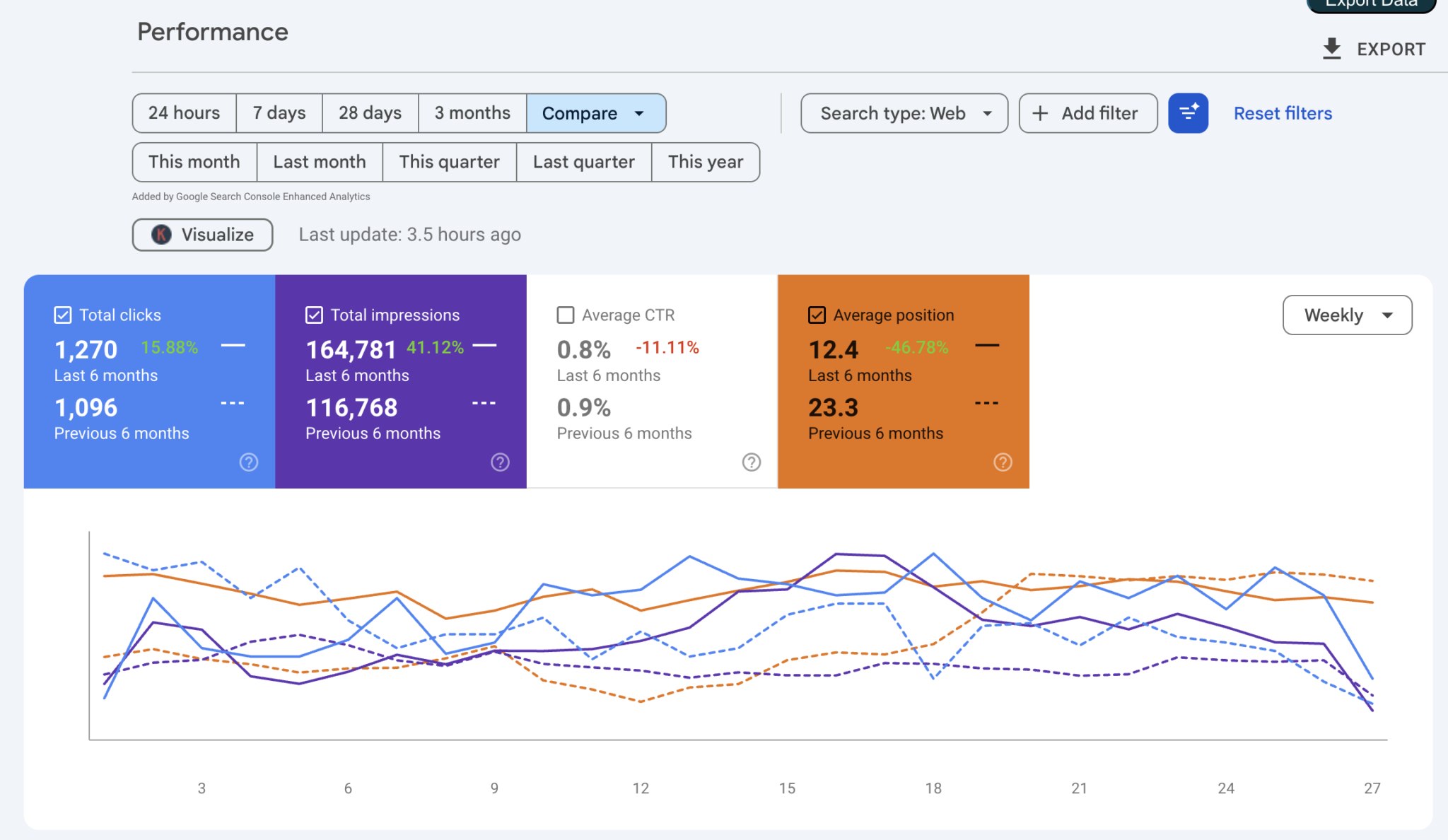
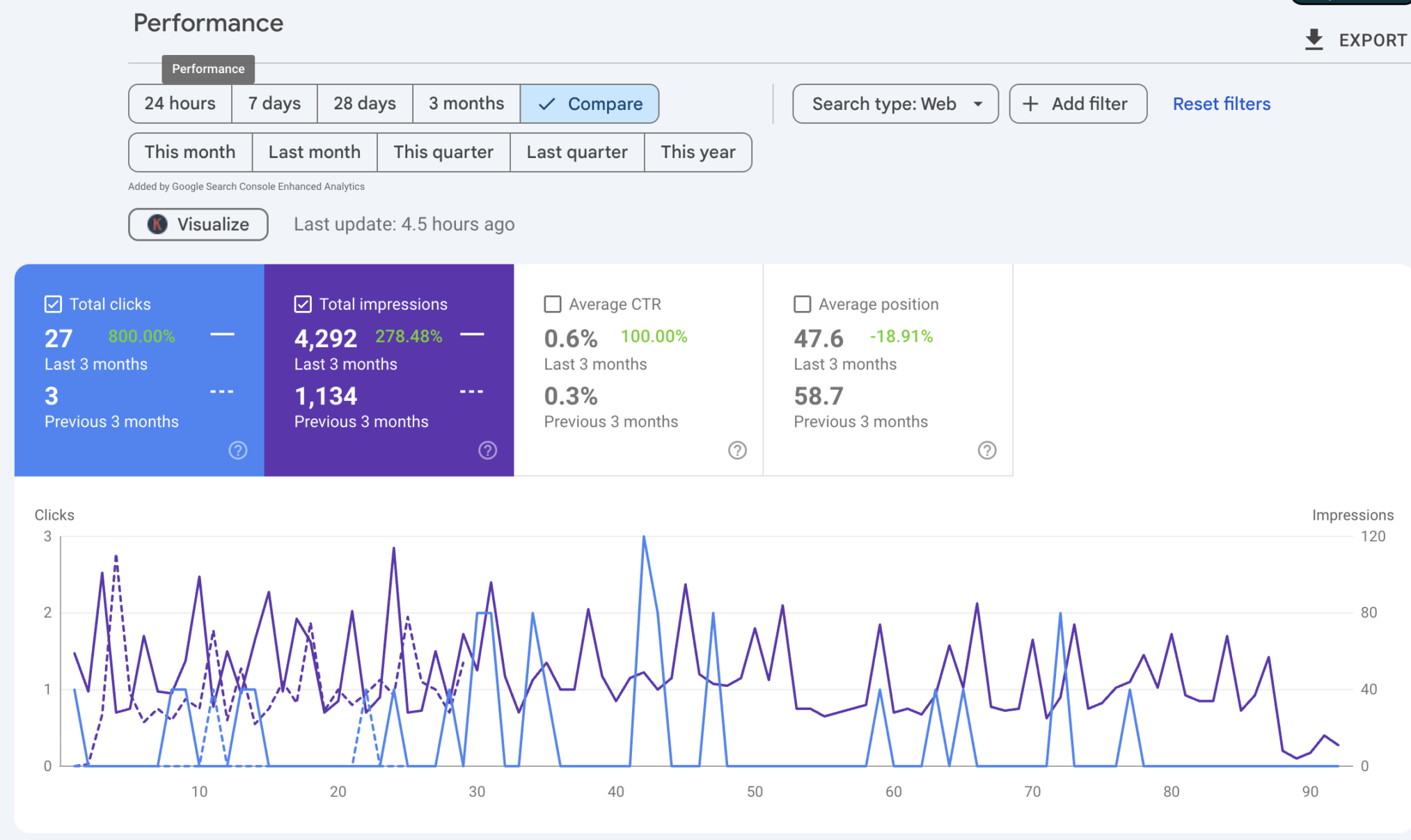
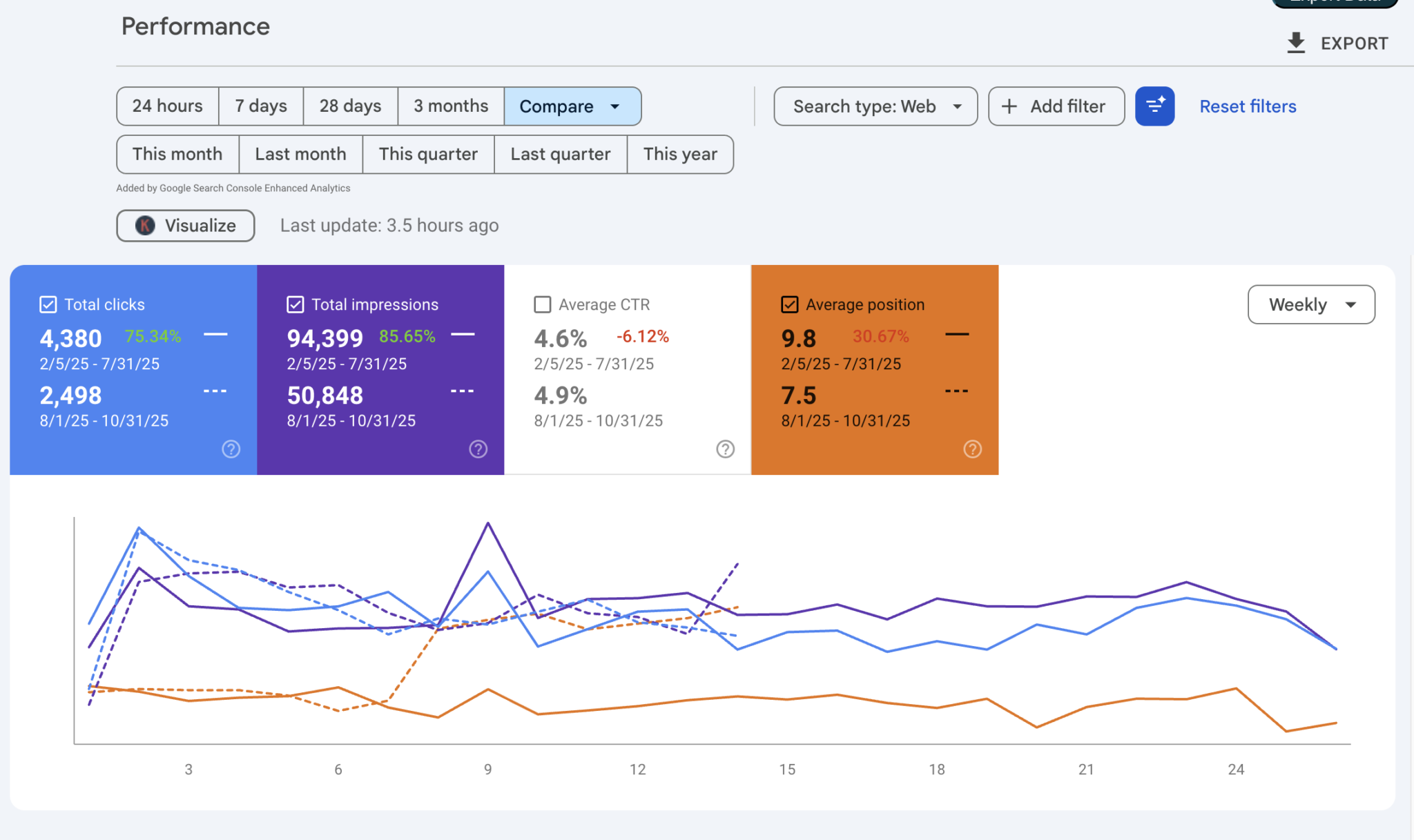
Performance data from real optimization projects. Google Search Console data. Individual client results — not guaranteed for every engagement.
Featured Case Study
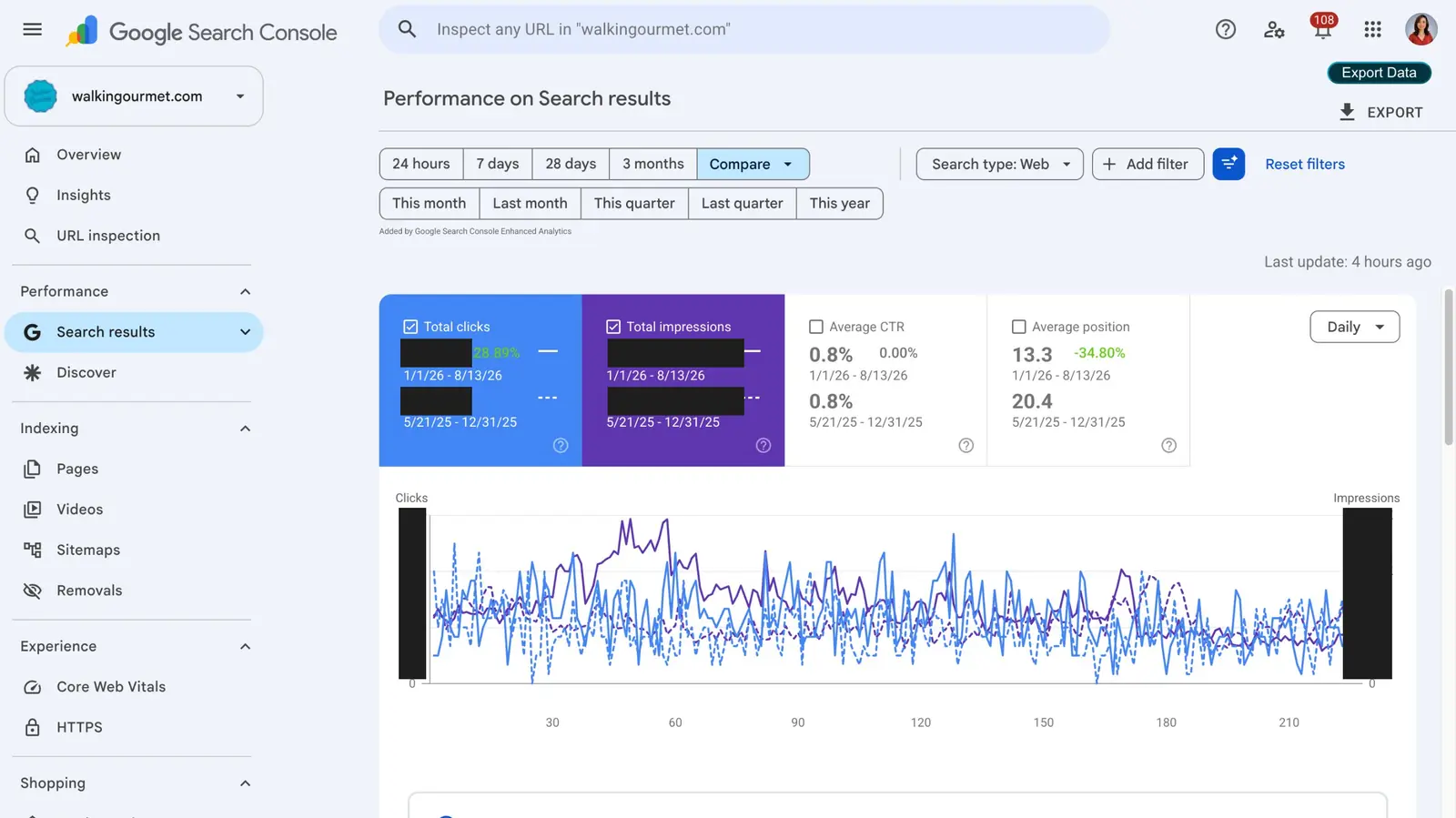
Walkingourmet — the full story, documented
A food and travel publisher with real content but no technical foundation underneath it: schema missing, internal linking flat, crawl budget wasted on pages that never should have been indexed.
I rebuilt the entity structure, shipped structured data across the site, and mapped internal links to topic clusters — the same method behind the three projects above, written up end to end.
organic growth on the strongest cohort — with the full method documented
Investment
How much does this cost?
One fixed fee. Everything below included. No retainer, no hourly billing, no surprises.
Base Package
From €3,500
6-month SEO strategy + guidance
- Full audit (technical + keyword + competitor + schema)
- Internal linking strategy
- Keyword roadmap (30–50 targets, prioritized)
- Content briefs (for 10–15 target keywords)
- Topical authority strategy
- Link building strategy
- Schema fixes (copy-paste ready)
- 6 monthly reports + review calls
30 minutes, no pitch. I’ll confirm whether this is a fit before either of us commits.
When price changes
The €3,500 starting price assumes: 0–50 pages, moderate competition (top 3 competitors have <100K backlinks).
| Scenario | Adjustment |
|---|---|
| Large sites (50–200 pages) | +€1,000–€2,000 |
| Highly competitive niches (500K+ backlinks) | +€1,500–€3,000 |
| New site / pre-traffic | Custom scoping |
| Ecommerce / special verticals | Custom quote |
For a full breakdown of packages, add-ons, and how pricing scales with site size and competition, see my full pricing breakdown.
Related Service
Do you also need AI visibility?
Being ranked and being cited are two different jobs. If AI assistants aren’t naming you, that’s the AI Visibility Audit, from €1,500 — and sometimes the one to fix first. Which you need depends on where your organic rankings already stand:
If your organic rankings are already solid
An AI visibility audit is the right next step. The foundations are there — what’s missing is whether models can extract and cite what you have.
If your organic rankings are weak
The 6-month SEO strategy above comes first. AI visibility follows once topical authority is built — fixing extraction on a site nothing links to buys you very little.
FAQ
Your questions, answered
Real objections I expect to hear — not the softball questions a brochure page pretends people ask.
The Work — Technical Questions
How long before we see organic traffic growth?
Quick wins ship first and can move long-tail rankings within 3–4 months (+10–20%). Structural work — topical authority, internal linking, links — pays off later, often +30–60% by month 6 if well executed. Growth compounds if you continue past month 6, and plateaus if you don’t.
Why isn’t the timeline fixed month by month?
Because the audit decides the order. Two sites with the same budget can need completely different first moves — one has an indexing problem worth fixing in week one, the other needs three months of topical groundwork. I sequence by effort versus impact, and you see the prioritised roadmap before any of it starts.
What if our website has serious technical problems?
I identify them in the audit and prioritize fixes: Core Web Vitals, missing schema, robots.txt blocks, redirect chains, mobile rendering. Major rewrites — site architecture changes, CMS migration, full redesign — are out of scope, but most technical issues can be addressed during the engagement.
How do you measure success?
Three metrics: ranking improvement (Google Search Console), organic traffic growth (Google Analytics), and authority growth (referring domains). You get a written report every month showing all three — real business outcomes, not vanity metrics like hours worked.
Our developers have no capacity. Can you implement everything?
No — this is a partnership. I deliver the strategy and guides; you, your team, or your vendor implement. I can’t implement better than someone who knows your codebase, and you learn more by doing it. If you truly have zero developer capacity, a full-service agency or freelance dev support may fit better.
Do you work alongside our existing agency or freelancers?
Yes — that’s a common setup. The strategy defines what should happen and in what order; whoever you already have can execute it. It often makes an existing team more effective, because they finally have a prioritised roadmap instead of a list of disconnected recommendations.
How I Work — Business Questions
How is this different from just hiring an SEO agency?
You’re hiring a strategist, not a vendor. Most agencies sell ongoing monthly retainers and keep SEO knowledge inside their firm — recommendations without the roadmap. I charge a fixed fee, hand you the complete roadmap, and document everything. After 6 months, you own the strategy whether you continue with me or not.
We already have an SEO agency. Should we replace them?
Probably not right now — if your current agency delivers a clear roadmap and shows measurable ranking progress, keep them. This service is a better fit if they charge retainers with no clear ROI or aren’t transparent about keyword targets and timelines.
Is this only for big companies?
No — it’s built for small and medium teams who want to own their SEO strategy rather than outsource it entirely. New sites with little or no organic traffic are welcome too; the strategy just weights differently, with more foundational work and a longer runway before the numbers move.
How much does SEO cost?
Pricing starts from €3,500 for a 6-month strategy covering sites with 0–50 pages and moderate competition. Larger or more competitive sites add €1,000–€3,000. Pricing is fixed-fee, not hourly — no surprises.
What do we actually receive each month?
A written report covering what shipped, what moved in rankings and traffic, what’s prioritised next and why — plus a review call to walk through it and adjust. Six reports and six calls across the engagement.
Do you also handle AI visibility?
That’s a separate service — the AI Visibility Audit — because it solves a different problem: whether AI models can extract and cite your content. The two connect (both reward the same authority signals), so I’ll tell you honestly which one you actually need first.
Next Step
Ready to build your 6-month roadmap?
Book a 30-minute call and I’ll confirm whether this is a fit — no pitch, no pressure. Prefer to start smaller? Send your site through the free audit first and see what comes back.
Or start smaller: get your free SEO audit first — no commitment required.